For years, the Piñones Boardwalk has been one of the most distinctive ways to explore Puerto Rico’s northeast coast. Running through a landscape of mangroves, lagoons, beaches and coastal forest just east of San Juan, the route has long attracted walkers and cyclists looking to experience another side of the metropolitan area.
Today, however, visiting the Piñones Boardwalk requires some advance knowledge. Sections of the wooden boardwalk are in poor condition, and we don’t currently recommend planning a visit around walking or cycling the entire route.
That doesn’t mean you should skip Piñones.
The beaches, food kiosks, mangrove landscape and Afro-Puerto Rican culture remain compelling reasons to explore this stretch of Loíza. This guide covers the boardwalk’s current condition, what’s planned for its restoration and what you can still see and do when visiting Piñones.
Piñones Boardwalk Conditions: What to Expect
Updated September 2026: The Piñones Boardwalk has deteriorated significantly over the years, and portions of the wooden structure are not currently suitable for normal recreational use.
The official name of the paseo is the Paseo Lineal Roberto Clemente Walker, and local officials have acknowledged the deterioration while working toward a major reconstruction project.
The important takeaway for visitors is simple: don’t arrive expecting to walk or cycle the historic boardwalk from end to end.
Conditions can vary along the route. If you encounter damaged, missing or unstable sections, don’t attempt to cross them simply to continue along the trail.
DPR Tip
Visit Piñones for the food, beaches, scenery and culture rather than specifically to complete the boardwalk. If biking or walking the entire paseo is the main reason for your trip, we’d wait until substantial reconstruction has taken place.
Is the Piñones Boardwalk Open?
This is where things get a little complicated.
The Piñones Boardwalk shouldn’t currently be viewed as a fully usable end-to-end recreational trail. Sections have deteriorated significantly, and conditions can vary considerably along the route.
Rather than thinking of the boardwalk as simply “open” or “closed,” it’s better to understand that its current condition prevents us from recommending it as a complete walking or cycling experience.
Some paved or intact areas may remain accessible, but that doesn’t mean the entire historic route can be safely completed.
Should You Walk or Bike the Piñones Boardwalk?
Not as a complete boardwalk trip right now.
Cycling was once one of the best ways to experience Piñones. The relatively flat route offered an enjoyable ride through mangroves and along the coastline, with plenty of opportunities to stop for food or take in the scenery.
Unfortunately, deterioration of the wooden sections changes that recommendation.
We wouldn’t currently rent a bike or arrive with the expectation of completing the traditional Piñones Boardwalk route.
If you’re exploring an intact section, turn around when conditions deteriorate rather than trying to navigate around damaged portions.
Hopefully, cycling will eventually become one of the best ways to experience Piñones again.
Is Piñones Still Worth Visiting?
Yes.
The condition of the boardwalk shouldn’t be confused with the condition of Piñones as a destination.
Piñones remains one of the easiest places near San Juan to combine Puerto Rican food, coastal scenery, beaches and local culture in a single outing.
Drive east along PR-187 from Isla Verde and the urban landscape quickly begins to change. Mangroves replace hotels and high rises, the Atlantic appears beside the road, and roadside kiosks and restaurants become increasingly common.
On weekends and holidays especially, Piñones can have a lively local atmosphere that feels very different from Condado or Isla Verde.
For today’s visitor, we think that’s the better way to approach Piñones:
Make the coastline, food and culture the experience and consider the boardwalk an interesting part of the area’s story rather than the primary attraction.
What Makes the Piñones Boardwalk Special?
The boardwalk passes through one of Puerto Rico’s most important coastal ecosystems.
The Bosque Estatal de Piñones encompasses mangroves, lagoons, beaches, dunes and other coastal habitats. Puerto Rico’s Department of Natural and Environmental Resources identifies Piñones as part of the island’s largest continuous natural mangrove system.
That environment is remarkable considering how close Piñones is to the San Juan metropolitan area.
One moment you can be surrounded by hotels, highways and airport traffic; a short drive later you’re looking across mangroves and lagoons.
The boardwalk was created to give people a way to experience this landscape while connecting different recreational areas along the coast.
When the paseo was in better condition, walking or cycling it offered one of the most unusual outdoor experiences near San Juan.
That’s also why restoring it matters.
Paseo Lineal Roberto Clemente Walker
The official name of the boardwalk is the Paseo Lineal Roberto Clemente Walker, honoring Puerto Rican baseball legend and humanitarian Roberto Clemente.
The designation recognizes Clemente’s connection to this coastline following the tragic events of December 31, 1972.
Clemente was traveling aboard a plane carrying humanitarian supplies to earthquake victims in Nicaragua when the aircraft crashed shortly after departing Puerto Rico. The waters off the northeast coast became part of the subsequent search.
Today, his name adds another layer of significance to a paseo already closely connected with the natural and cultural landscape of Loíza.
Come Hungry: Eating in Piñones
Even if you never step onto the boardwalk, there’s another very good reason to visit Piñones:
The Food
Piñones is famous for its roadside kiosks and Puerto Rican frituras.
Look for classics such as:
- Alcapurrias — fritters commonly made from green banana or yautía and filled with seasoned meat
- Bacalaítos — thin, crispy codfish fritters
- Empanadillas — fried turnovers with a variety of fillings
- Piononos — sweet plantain wrapped around a savory filling
- Pastelillos and other freshly fried snacks
You’ll find food stops scattered along PR-187, making it easy to combine lunch or a few smaller bites with a drive along the coast.
Weekends tend to bring the biggest crowds and liveliest atmosphere.
If food is one of your priorities, arrive hungry.
Beaches and Coastal Stops
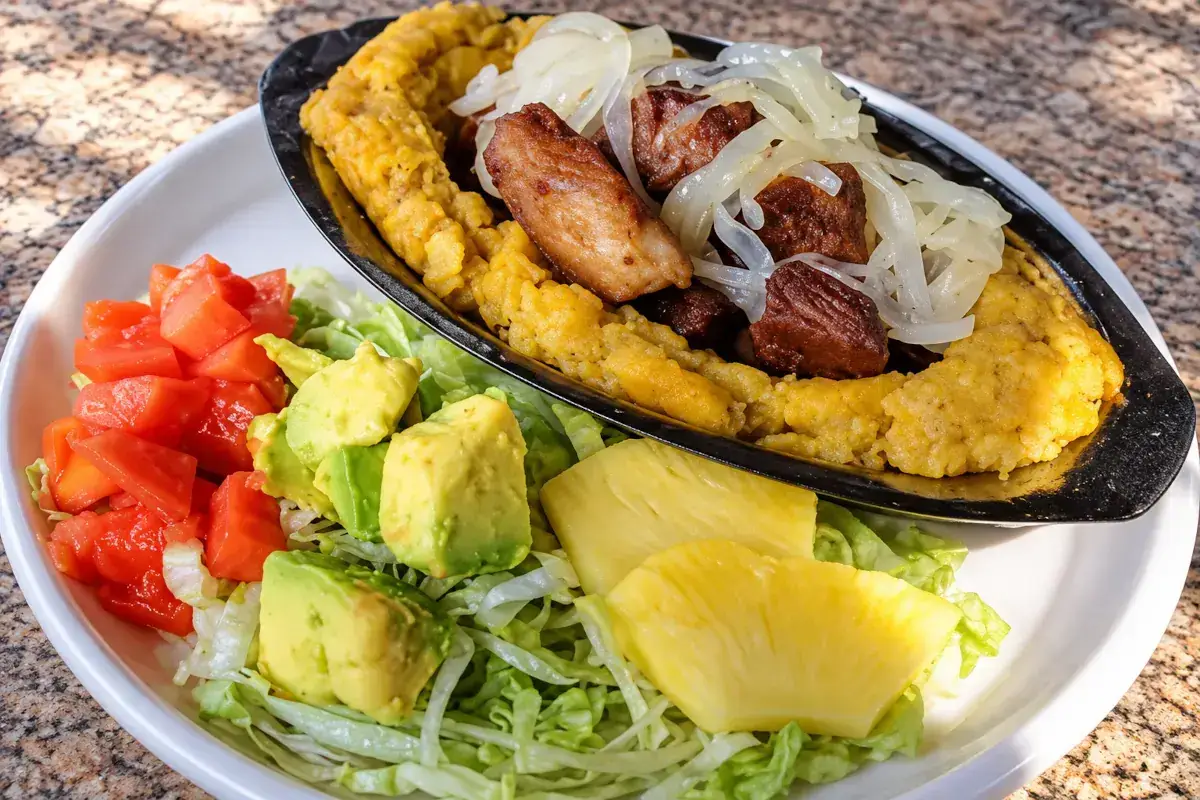
The Piñones coastline provides several opportunities to stop near the Atlantic.
Among the areas associated with the broader Piñones coastal landscape are Playa Aviones, Playa Chatarra, Tres Palmitas and Vacía Talega.
But don’t assume every attractive stretch of coastline is suitable for swimming.
Atlantic conditions can change quickly, and some sections are better known for waves and surfing than calm swimming. Pay attention to ocean conditions and avoid entering rough water simply because other people are nearby.
Even without swimming, stopping along the coast adds considerably to a Piñones outing.
Exploring the Mangrove Landscape
The mangroves are easy to overlook when food and beaches get most of the attention, but they’re arguably the defining natural feature of Piñones.
The Bosque Estatal de Piñones protects an extensive coastal ecosystem that provides habitat for marine and terrestrial wildlife while helping protect the coastline itself.
Lagoons, channels, mangroves, beaches and wetlands all come together within a surprisingly compact area.
If you’ve spent most of your Puerto Rico vacation around Old San Juan, Condado or Isla Verde, the landscape provides an immediate contrast.
And it’s only minutes away.
Getting to Piñones
Piñones is located immediately east of the San Juan metropolitan area, primarily along PR-187 toward Loíza.
From Isla Verde, the transition into Piñones can happen surprisingly quickly.
A rental car is currently the easiest way to explore Piñones, particularly because we don’t recommend depending on the boardwalk as a continuous walking or cycling route.
Driving PR-187 allows you to stop at different beaches, food kiosks and viewpoints rather than committing to one starting point.
Parking
Parking depends on where you stop.
Some businesses have designated parking while other coastal areas rely on informal roadside parking.
Don’t block traffic or private entrances, pay attention to posted restrictions and avoid leaving valuables visible inside your vehicle.
Best Time to Visit Piñones
For a quieter experience, weekday mornings and early afternoons are usually preferable.
Weekends bring a very different atmosphere.
That’s when Piñones tends to become busier with people visiting restaurants, kiosks and beaches. Traffic along PR-187 can also become considerably heavier.
Which is better depends on what you want.
For scenery and exploring, go earlier.
For atmosphere and food, weekends can be part of the experience.
Puerto Rico’s tropical sun can also be intense, particularly around midday. Bring water, sunscreen and sun protection even if you’re only planning a relatively short visit.
How Much Time Should You Spend in Piñones?
Allow approximately two to four hours for a relaxed visit.
That gives you enough time to drive along PR-187, make a few coastal stops and enjoy lunch or some frituras without rushing.
You can easily spend longer if you’re combining Piñones with beach time.
Because we don’t currently recommend attempting the complete boardwalk, there’s little reason to structure your visit around covering a particular distance.
Explore at your own pace instead.
Plans to Rebuild the Piñones Boardwalk
Fortunately, there are plans to restore the paseo.
In March 2026, Loíza Mayor Julia Nazario Fuentes said designs for reconstruction of the Paseo Lineal Roberto Clemente Walker were approximately 90% complete, with environmental studies still required.
The reconstruction was estimated at approximately $17 million and is expected to be carried out in phases.
The deterioration isn’t a recent problem. Government reporting about earlier reconstruction efforts noted that the paseo had already been in poor condition before Hurricanes Irma and María.
As the reconstruction progresses, the experience described in this guide could change significantly.
We’ll continue updating this article as meaningful restoration work is completed.
Frequently Asked Questions
Is the Piñones Boardwalk worth visiting?
We wouldn’t currently make the boardwalk itself the primary reason for visiting. However, Piñones remains worth exploring for its food, beaches, coastal scenery, mangrove ecosystem and culture.
Can you bike the Piñones Boardwalk?
We don’t currently recommend planning an end-to-end bike ride along the traditional boardwalk route because portions of the wooden structure have deteriorated.
Can you walk the Piñones Boardwalk?
Some sections may be accessible, but conditions vary. Don’t assume the entire route can be safely walked, and don’t attempt to cross damaged sections.
Is Piñones close to San Juan?
Yes. Piñones begins just east of the San Juan metropolitan area and Isla Verde, making it an easy addition to a San Juan stay.
Do you need a car to visit Piñones?
A car is currently the most practical option for most visitors. It allows you to explore different areas along PR-187 without relying on the boardwalk to connect them.
What is Piñones known for?
Piñones is particularly known for its Afro-Puerto Rican heritage, traditional frituras, mangrove forest, beaches and coastal scenery.
The Bottom Line
The Piñones Boardwalk isn’t the attraction it once was, at least for now.
Years of deterioration have left portions of the paseo in poor condition, and a major reconstruction project remains in development. For anyone who remembers cycling or walking through Piñones when the boardwalk was in better shape, that’s disappointing.
But Piñones itself is still worth discovering.
Come for the food. Explore the coastline. Experience the mangrove landscape. Spend some time in a part of Loíza whose character feels distinctly different from nearby San Juan.
Just don’t arrive expecting to complete the old boardwalk.
Hopefully, the planned reconstruction will eventually return the Paseo Lineal Roberto Clemente Walker to what it should be: one of the best ways to experience this unique stretch of Puerto Rico’s northeast coast.